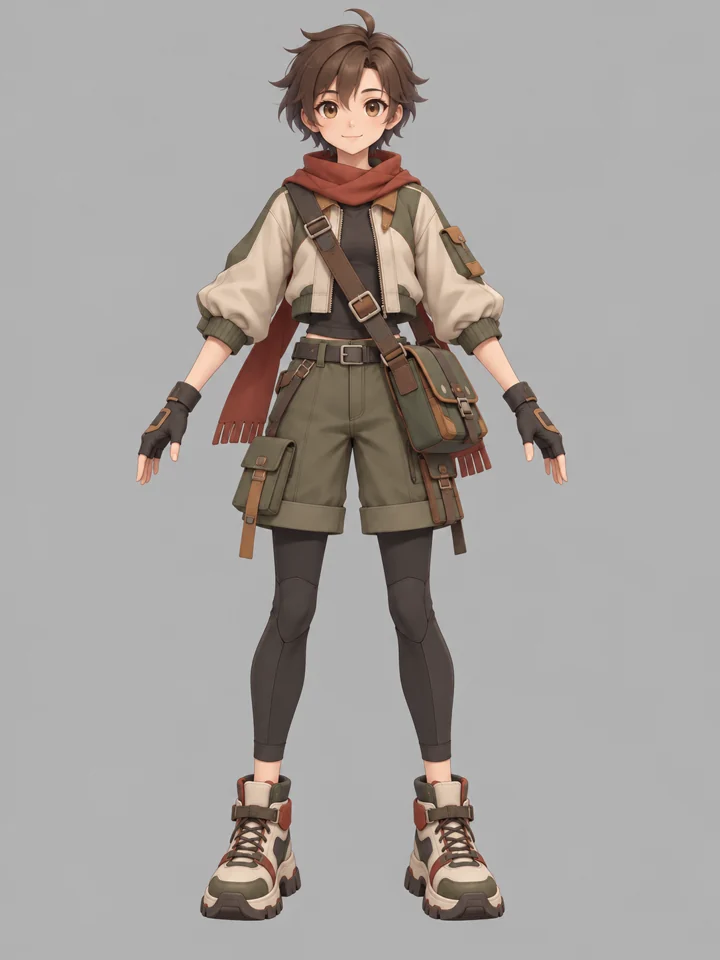
We measured 28 genuine Tripo outputs, then ran the generator live from one original drawing. This page reports what it gets right, what repairs it leaves you every time, and which route fits the thing you are actually making.
Measured computed from the files, reproducible
Observed seen by a reviewer in the app or a study
Open nobody has tested it yet
Input · one front drawing
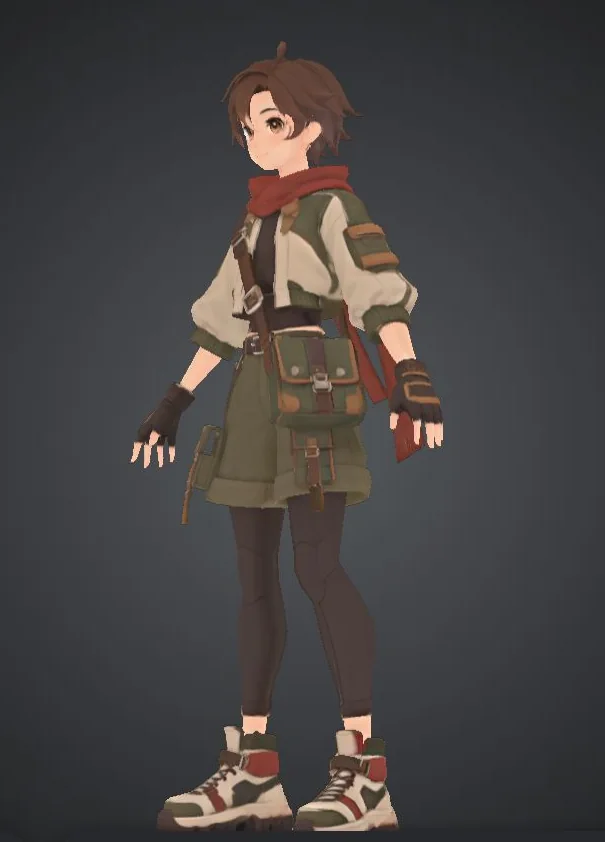
P2 · 6,976 quads
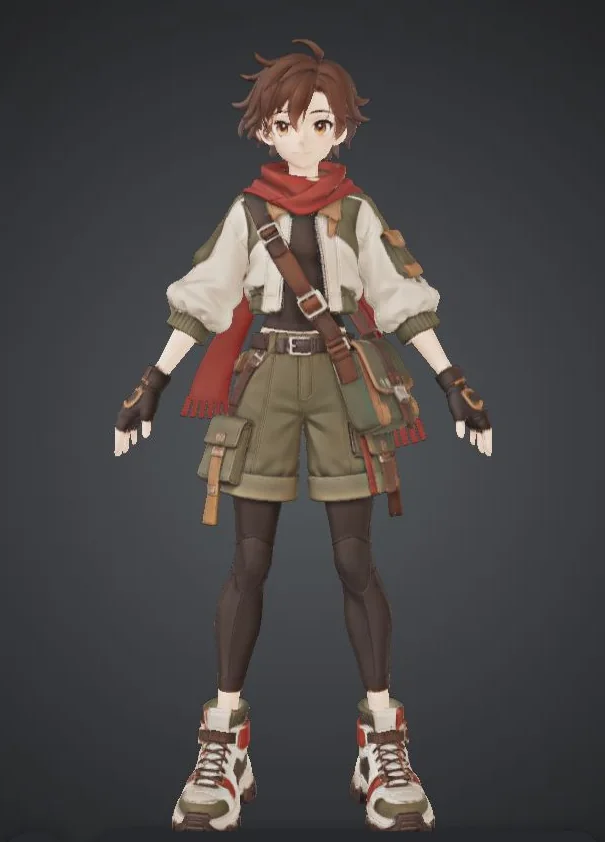
H3.1 · 1.9 M triangles
Same drawing, two generators, two different kinds of object. Renders are crops of the Studio viewer, not our own renderer. Observed
Genuine files measured
28 from 15 generations
P2 outputs that were one closed shell
0 of 15
HD outputs that were not closed
0 of 13
Files with facial expressions
0 of 28
Credits spent live
135 of a 200 ceiling
01
The short answer
Tripo is a fast way to get a coherent, likeness-preserving candidate. In every earlier study we drew on, a model accepted for use first went through local repair: decimation or re-bake, material overrides, weight fixes, a deliberate scale.
The leverage is not in generating more. It is in choosing the right route for the intended use, and knowing in advance which repairs that route always needs. The two main routes do not produce more or less of the same thing. They produce structurally different objects, and that difference decides what you can do next.
02
Two routes, two objects
We welded every file by bit-identical vertex position and counted connected pieces (“shells”), open edges and non-manifold edges. The method is written down as one spec, implemented in Python and JavaScript, and the two implementations give identical results on all 28 files. Measured
P2 · Smart Mesh
Many open pieces
Files
15
Triangles
20,222 – 53,252
Shells
7 – 60 open pieces
Largest piece
12 – 84% of triangles
Open · non-manifold edges
453 – 6,623 · 4 – 425
File size
0.5 – 6.6 MB
A defect for printing and booleans, and a possible gift for editing: the pieces may already be hair locks, eyes and garments.
A watertight 2-manifold: a strong start for printing or as a bake source. Everything is fused into one skin, so nothing can move separately.
P2HD
Turn the two routes yourself
One character, both routes, two genuine provider files. 14–16 MB per pair.
Nothing is downloaded until you press the button.
Left: P2 (46k / 47k triangles). Right: HD (248k / 244k triangles). Public copies of files generated on a paid account in 2026-09; internal names removed, geometry and textures unchanged. Measured
Every file, by triangle count and number of pieces
Point at or focus a dot to read that file.
Each dot is one genuine provider file, anonymized. Several files are exports of the same generation (textured, rigged, clip variants), so 28 files come from 15 generations. Both axes are logarithmic. MeasuredShow all 28 rows as a table
All measured files
Measured All 28 files are normalized to about one unit tall (0.947 – 1.000) with their base at the origin, whether the subject is a head, a body or a cat. Real-world scale is always a deliberate step.
Measured Without a metal/rough map, material factors are the glTF defaults (roughness 0.5, metal 0). All six P2 rig exports carry roughness 0.9 where the matching textured export carried 0.5: rigging changes the material.
Measured The generator: "Tripo" stamp survives editing. At least 18 derivative files still carry it. It is a hint, never proof of an untouched original; keep the original’s hash.
03
Are P2’s pieces meaningful?
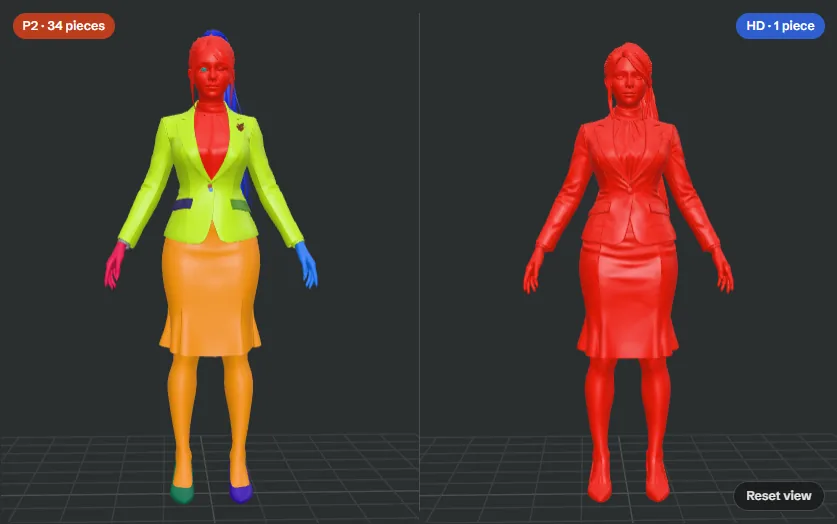
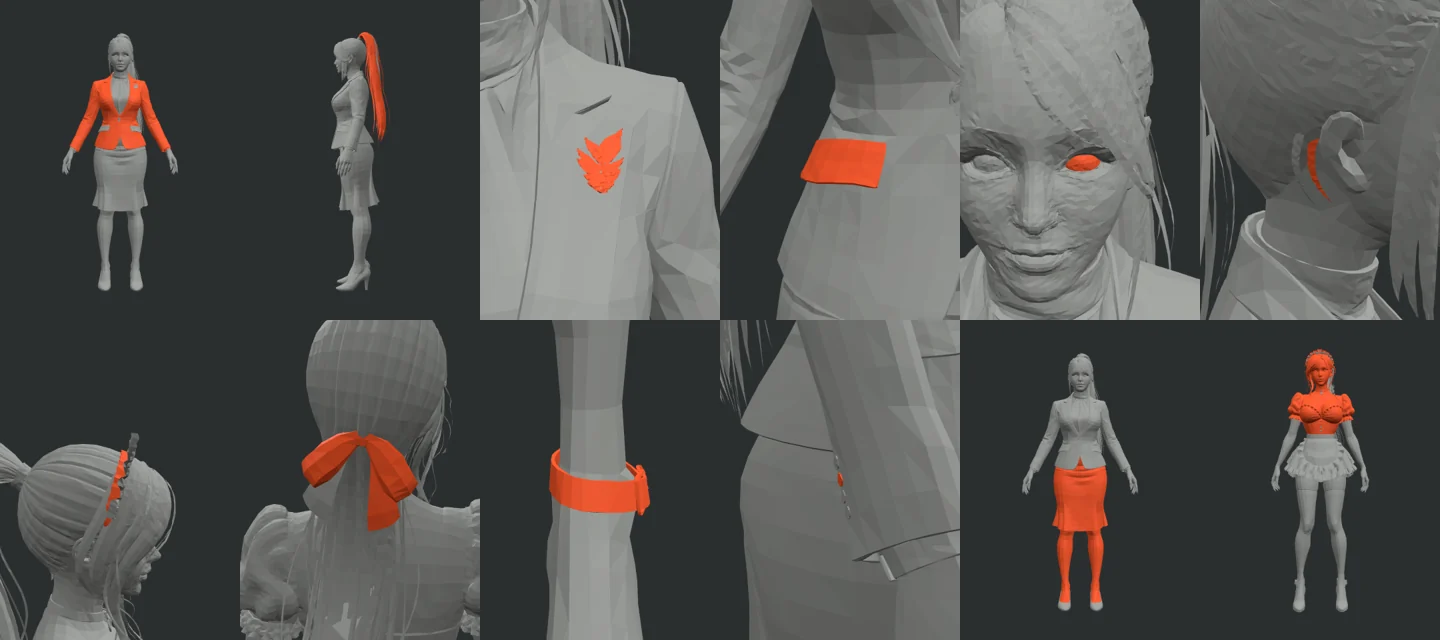
P2’s open pieces could be noise from the generator or a gift for editing. To find out, we rendered every one of the 94 pieces in the two P2 files above, each highlighted on its own, and named what it is. The labels come from an AI reviewer working from those renders and have not yet been checked by a person. Observed
Pieces that are a nameable part
87 of 94
Hidden or tiny fragments
7 1.5% of triangles
Triangles in three fused masses
63% in each of the two files
By piece count
62%16%6%6%7%
By triangles
8%17%63%11%
Fused masses: head + torso + top, legs + skirt, jacket or apron
Both P2 files, 94 pieces, 93,279 triangles. Counted with the same weld rule as the measurements above; category shares are exact, category names are the reviewer’s.Top: jacket, ponytail, lapel brooch, pocket flap, eye, ear piece. Bottom: headdress, hair ribbon, ankle strap, a 43-triangle sleeve button, then the two kinds of fused mass: skirt with both legs, and head with torso and bodice.
P2 gives you an accessory layer for free, not a body–garment split. Hair locks, eyes, buttons and jewellery already come apart, so they can be recolored, swapped or rigged on their own. But the clothes that matter for deformation are fused to the body: a skirt to both legs, a blouse or bodice to the torso. Separating those still needs segmentation or a manual cut. Whether Studio’s segmentation works on P2 the way it did on HD armor is Open.
04
One drawing, live
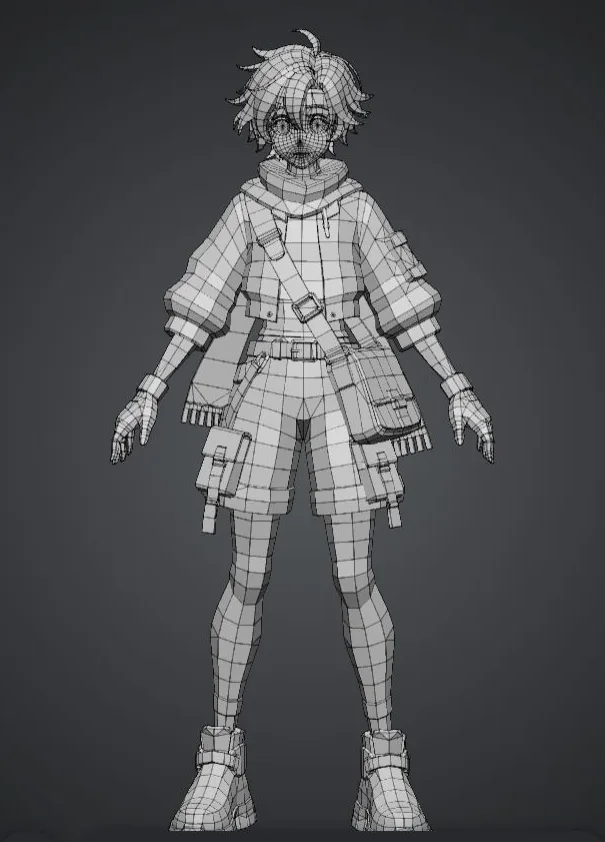
To compare the routes fairly, we drew one original character for the test (a curious courier, front view only, A-pose) and generated it once with each route in Tripo Studio. This was a supervised run on a free account, so nothing could be exported. The counts below are the Studio viewer’s own readouts, not our measurements. Observed
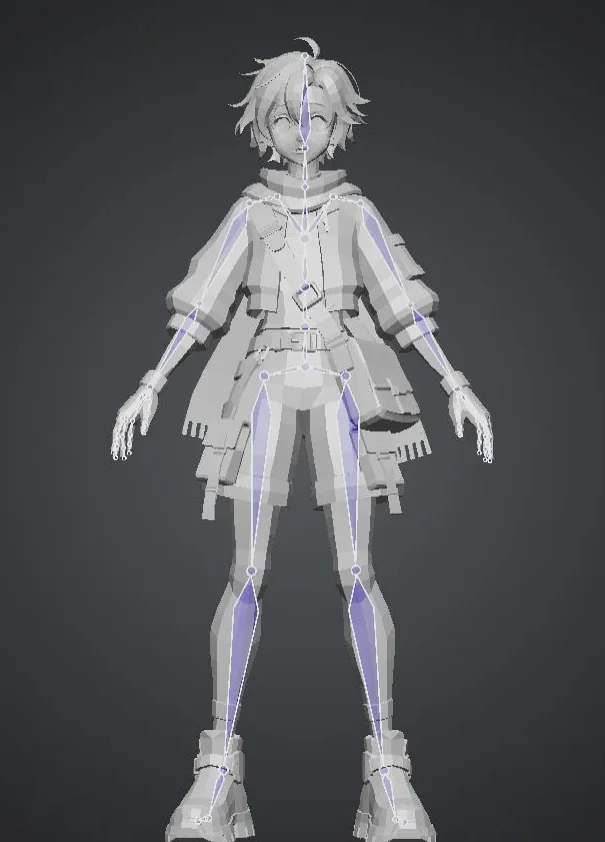
Front, wireframe. The quad layout follows the jacket, satchel strap and scarf.
Topology
Quad
Faces
6,976
Vertices
6,501
Matched generation from the same drawing
P2.0
H3.1
Wall time
≈ 1 min
≈ 5 min
Topology
Quads · 6,976 faces (target 6,000 → +16%)
Triangles · 1,899,257
Texture
None; geometry only
4K PBR, remove-lighting on by default
Front
Every garment piece present, readable face loops
Very close to the drawing; sculpted seams and folds
Invented back
Plausible; moved the scarf tails behind (the prompt said so, the drawing did not)
Plausible hair locks, a strap across the back
Credits
0 (free trial; normally quoted 100)
55
05
Fused shells, cut apart
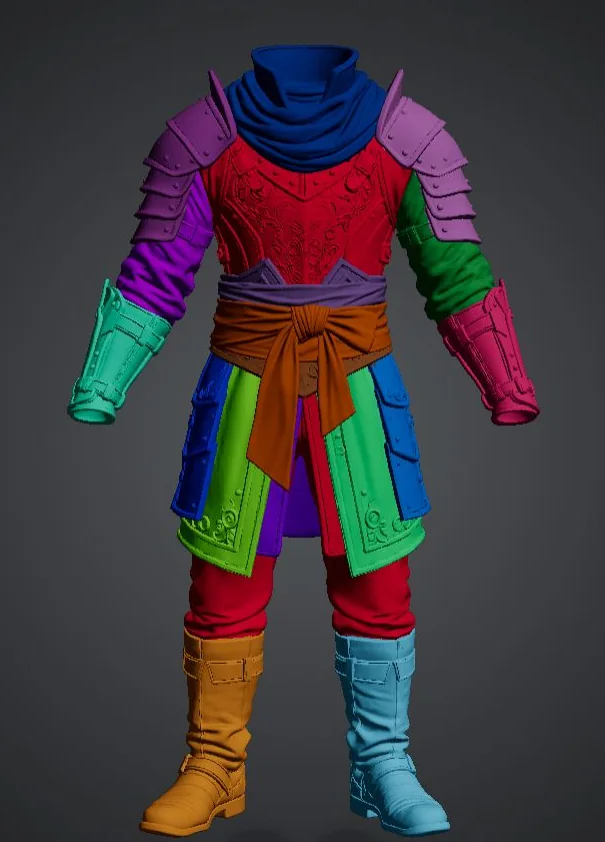
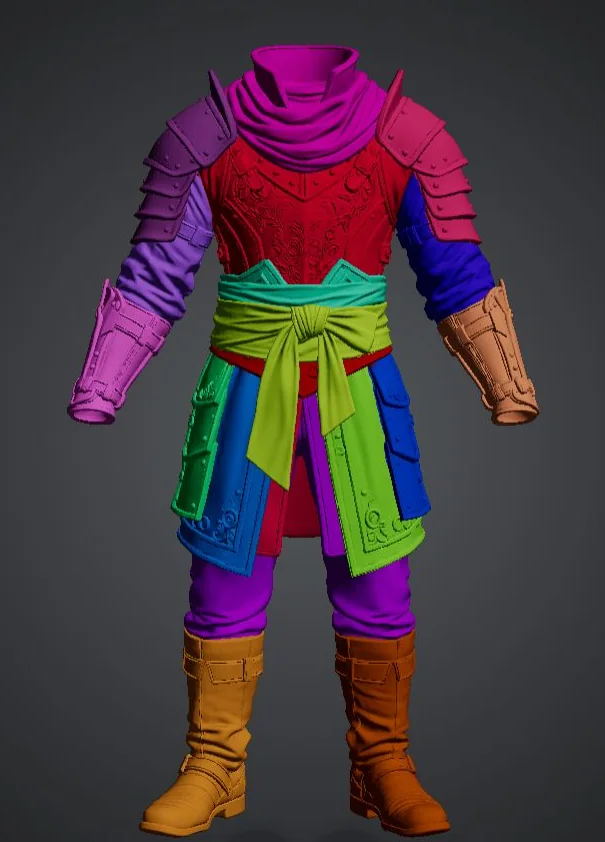
HD fuses every garment into one skin. That made HD a dead end for anything that moves, until we tried Studio’s segmentation on a fused 1.96-million-triangle demo armor.
Observed The “standard (6–15)” setting returned 21 named parts, more than its label promised. They were garment-level and side-aware: scarf, breastplate, left and right pauldrons, upper arms, bracers and boots, sash knot versus sash band, front and side tassets, trousers.
Observed Quick-seal part completion closed the cuts at no charge. Vertices went from 1,021,774 to 1,181,866.
Open A character with hair and a face, and whether completed hidden surfaces hold up when the parts move. Judging that needs an export.
The armor is a demo model that ships with the Studio account, shown here only to discuss the segmentation result.
06
From mesh to moving
Auto rig on the 7k-quad P2: head, spine, arms, hands, legs.
0
Generate P2.0 Free trial; the quote was 100.
20
Auto rig Humanoid, Mixamo-style skeleton, in about a minute. Observed
0
Walk preset A 2.33 s clip that carries root motion: the character walks out of the viewer. An older export travelled 1.53 units over 2.38 s, one and a half body heights. Measured
20
4K texture, lighting removed Face, eyes and colors read clearly at about 7k faces; the texture carries the detail. Observed
About 20 credits on top of a trial generation produced a real-time-sized textured character that already walks. Whether it deforms well is a separate question. In earlier studies auto-rig weights pinned fingertips to legs and folded a skirt into the thighs. Observed
07
Repairs to plan for
None of these is a reason to avoid the generator. Each is a step to budget for, together with a check that shows whether it has been done.
Baked lighting
Relighting a color map changed the apparent eye sockets and smile; the Studio look does not travel with the file. Remove-lighting is now on by default for HD texturing, which targets exactly this. Whether it fully works is untested without an export.
ObservedOpen
Density
HD Ultra is about 2 M triangles and 46–59 MB. Treat it as a reference, donor or bake source, never a runtime asset as is. One festival cart went to 11,580 triangles and 556 KB, and shipped.
Measured
Rig weights
Fingertips weighted to legs (5,590 hand vertices re-pinned), a tail weighted to legs, an 8.15% leg-length asymmetry, a skirt folding into the thighs.
MeasuredObserved
Root motion
Preset clips travel. A game controller that expects in-place clips needs a conversion step.
Measured
Expressions
0 of 28 files had morph targets. Blinks, visemes and smiles must be authored. No separate eyeballs or lids were verified.
Measured
Polygon targets
Targets are approximate: 6,000 gave 6,976 (P2) and 6,396 (retopology); an older 5k quad target gave about 4,100, and a 10k target exported as 20,222 triangles.
MeasuredObserved
08
Choose a route by what you are making
This is a judgment drawn from the evidence above, not a benchmark.
Start with
Multiview input from consistent orthographic crops. HD for eyes and irises, P2 where you need editability.
Expect to do
A material pass for baked light, eye and lid repair, authored expressions.
Check before spending more
Review the face, back and hair in flat albedo and in untextured clay.
Start with
P2 then auto rig (cheapest, fastest), or H3.1 then quad retopology when you need a precise face budget and the HD texture.
Expect to do
Weight repair (hands, tails, skirts), in-place clips, a roughness reset. P2 pieces already separate hair, eyes and trim; skirts and tops stay fused to the body.
Check before spending more
Play every clip; compare limb lengths left and right.
Start with
Text or image to HD.
Expect to do
Weld, then decimate, then re-bake to one atlas; set the scale.
Check before spending more
The silhouette at play distance and the triangle budget.
Start with
HD or Ultra; every one we measured was a closed manifold.
Expect to do
Real scale, wall thickness, hollowing.
Check before spending more
Confirm closed shells by measurement, then a slicer check. Printability itself is Open.
Two tested ways to a 6k-quad textured character
≈ 20
P2 native trial generation, plus 20 for a 4K texture. Cheapest and fastest; overshot the face target by 16%.
95
H3.1 + retopology 55 plus 40. Hit the target within 6.6% and keeps the HD texture. Whether its even grid deforms better is Open.
09
What it cost
We set a ceiling of 200 credits before starting. Every charge matched the quote shown before the click, and no balance changed without a cause we could name. The quotes are what this account saw that day, not a price list. Observed
The free plan is a viewer, not a pipeline. Export is locked and every generation is public. Without a file, nothing can be measured, opened in Blender or tested in an engine. That is why the live results in sections 04 to 06 are graded as observed rather than measured.
10
The tool behind the numbers
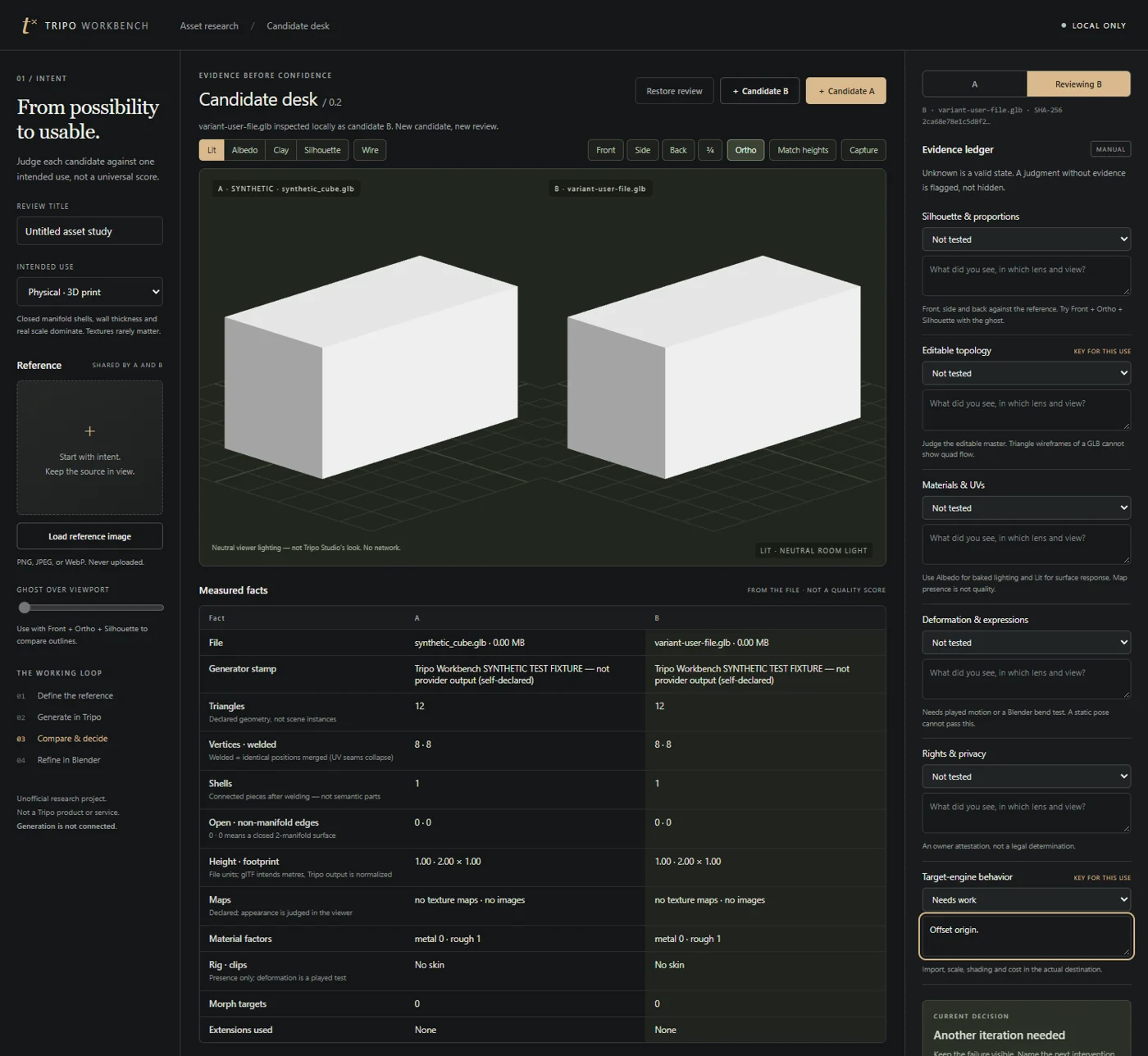
The measurements come from a small local review desk built for this study. It opens two candidates side by side under one camera, switches between lit, flat-albedo, clay and silhouette views, and measures shells, open edges, maps, rig and root travel straight from the file. It records a per-check verdict with its evidence, and keeps “not tested” as a valid answer. It runs offline and uploads nothing. It is a private research tool and is not distributed.
Shown with synthetic test boxes, which are deliberately not provider output. Each check starts as “not tested” and stays that way until evidence is written.
11
Limits & open questions
What this is not
Not a benchmark. One drawing, one run per route, so no estimate of variance.
Live-run numbers are Studio readouts; no file was downloaded.
No deformation testing beyond watching one walk preset.
The measured corpus is one person’s past work, mostly stylized characters, generated in 2026-09 on a paid account. It may not represent other subjects or later model versions.
Welding is bit-exact: near-coincident cracks count as separate pieces.
Next experiments
Check the piece labels by eye (section 03 was labelled by an AI reviewer), then try Studio segmentation on a P2 character to split the fused skirt and torso.
Segment a character with hair and a face, then judge the parts in motion. Needs an export-capable plan.
P2 multiview for hair and the back of the head, the most repeated failure.
In-place clips: can Studio export animation without root motion directly?